
How Commercial and Industrial Energy Management Upgrades Lower Utility Costs in 2026
Energy Management helps facilities lower utility costs by identifying waste, improving HVAC and boiler performance, controlling demand, and keeping equipment close to its intended efficiency. In 2026, strong projects combine audits, retrofits, controls, maintenance, and utility incentives to reduce energy use while protecting comfort, production, reliability, and budgets.
Energy Management lowers utility costs by improving how your facility produces, distributes, controls, and uses energy. In a commercial building, manufacturing plant, school, or municipal facility, losses across heating, cooling, pumps, steam systems, controls, and schedules can accumulate into a substantial annual expense. A structured approach helps you find those losses, prioritize upgrades, and track the savings.
At Atkinson Energy Group, our commercial and industrial HVAC services support facilities that need to modernize older systems, improve heating and cooling performance, and reduce avoidable energy use. Our work can include retrofit planning, high-efficiency HVAC equipment, steam and hydronic systems, boiler room improvements, variable frequency drives, pumps, heat exchangers, and preventive maintenance.
Why does industrial energy management reduce operating expenses?
Industrial energy management starts with understanding where energy is consumed and where performance is being lost. Utility bills show the total cost, yet they rarely explain whether the problem comes from equipment running outside production hours, poor steam distribution, oversized motors, inefficient boilers, unnecessary simultaneous heating and cooling, or controls that no longer match the schedule.
The International Energy Agency reports that systematic energy management in industrial companies can deliver meaningful savings during the first years of implementation. Those savings often come from operational corrections and equipment improvements, which is why an effective plan should evaluate the system before capital is committed.
 A useful industrial energy management review may examine:
- Utility consumption and demand patterns.
- Boiler combustion and steam system performance.
- Hydronic distribution temperatures and pumping.
- HVAC scheduling and control sequences.
- Motors, pumps, fans, and variable frequency drives.
- Maintenance history and recurring equipment faults.
- Operating hours compared with actual facility needs.
Which energy efficiency services usually deliver the fastest savings?
Energy efficiency services should begin with measures that reduce waste without disrupting your operation. Many facilities assume a full equipment replacement must come first, although controls, maintenance, system balancing, steam repairs, scheduling, and targeted component upgrades can often improve performance before a larger retrofit is required.
Energy efficiency services for HVAC controls and scheduling
HVAC systems can consume energy after occupants leave or production slows. Reviewing schedules, temperature setpoints, economizer operation, staging, ventilation requirements, and control sequences helps align runtime with actual demand. Modern controls also make performance easier to monitor and help your team spot unusual consumption sooner.
Energy efficiency services for pumps, fans, and variable frequency drives
Pumps and fans do not always need to operate at full speed. Variable frequency drives can match motor speed to actual load when the application allows it, reducing unnecessary energy use while supporting stable operation. Atkinson Energy Group works with high-efficiency air-conditioning pumps, VFDs, rooftop units, and related commercial and industrial equipment in retrofit and modernization projects.
How do energy management services improve boiler and steam performance?
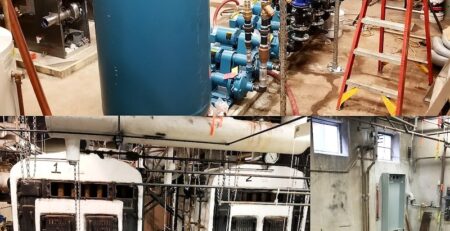
Energy management services can uncover losses that are difficult to see during normal boiler room operation. A boiler may continue providing heat while using more fuel than necessary because of combustion issues, failed steam traps, poor condensate return, heat-transfer losses, control problems, or equipment that no longer matches the facility load.
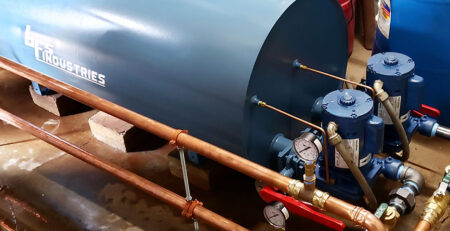
For steam and hydronic facilities, reviewing the boiler and distribution system together matters. Atkinson Energy Group supports firetube boilers, blowdown separators, flash tanks, heat exchangers, condensate return systems, boiler feed tanks, pumps, and steam traps, allowing upgrades to address both heat production and distribution.
If your team is evaluating repair, replacement, maintenance, or system life, our commercial and industrial HVAC FAQs provide practical guidance on boiler service intervals, replacement considerations, HVAC maintenance, system types, and installation planning.
How can industrial energy management control peak demand?
Industrial energy management also helps facilities understand when electricity use is highest, not only how much is consumed during the month. Depending on your utility rate structure, peak demand can influence part of the bill, so operating several large loads at the same time may create costs that are not obvious from total kilowatt-hour consumption.
A better operating sequence can reduce unnecessary overlap among HVAC equipment, pumps, electric heating systems, process loads, and other large electrical assets. Controls can stage equipment, adjust start times, and respond to changing conditions while maintaining required temperatures and production needs. This planning should be based on interval data, operating requirements, and equipment limitations.
What should you upgrade first in an Energy Management plan?
Energy Management projects should be prioritized by measured performance, operating risk, maintenance needs, available incentives, and expected payback. Starting with the largest piece of equipment can overlook smaller measures that reduce energy use sooner.
A practical sequence is:
- Establish a baseline using utility and operating data.
- Audit HVAC, boilers, steam, hydronic systems, controls, and major loads.
- Correct maintenance and control issues that waste energy.
- Identify retrofit measures and estimate savings.
- Review available utility incentives before equipment is ordered.
- Install, commission, and verify the upgraded system.
- Continue monitoring so savings persist.
In Massachusetts, Mass Save programs include incentives for air conditioning, heat pumps, energy recovery ventilation, building management systems, variable frequency drives, and custom efficiency projects. As of July 1, 2026, commercial heat-pump projects require pre-approval before installation, making early planning especially important.
For facilities planning capital work in 2026, this sequencing also supports better budgeting because maintenance corrections, controls, and targeted retrofits can be separated from larger replacement projects. That gives facility teams a clearer basis for scheduling work and protecting critical daily operations.

When do energy management services justify equipment replacement?
Energy management services can help determine when repair costs, declining efficiency, reliability concerns, and operating requirements make replacement reasonable. Commercial boilers commonly remain in service for many years, but age alone should not determine the project; maintenance history, energy consumption, load requirements, water quality, safety, and recurring failures should also be reviewed.
When replacement is justified, the new system should be sized and engineered around actual facility conditions. Atkinson Energy Group’s commercial boiler systems include equipment selection, system design and engineering, boiler room retrofits, installation, preventive maintenance, and repair support for commercial and industrial facilities across Massachusetts and New England.
Build lower utility costs into everyday operations
A successful Energy Management upgrade keeps producing value after installation day. Your facility needs schedules that match real demand, maintained equipment, calibrated controls, documented setpoints, and periodic review of utility data. These practices make it easier to identify performance changes before they become months of unnecessary energy expense.
Atkinson Energy Group combines energy efficiency audits, project design, installation, retrofits, maintenance, and commercial and industrial HVAC expertise to improve system performance and manage energy costs. Our team works with government, manufacturing, municipal, public-sector, healthcare, education, and commercial facilities throughout Massachusetts, Rhode Island, and the broader New England service area.
If your facility is facing rising utility costs, aging HVAC equipment, boiler room issues, or a planned efficiency upgrade, contact Atkinson Energy Group. We can review your current systems, identify practical energy-saving opportunities, and develop an upgrade path based on your facility’s operating needs.

Leave a Reply